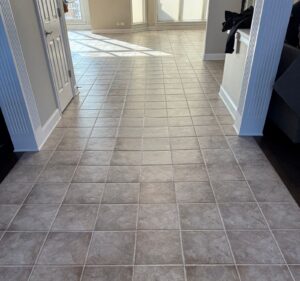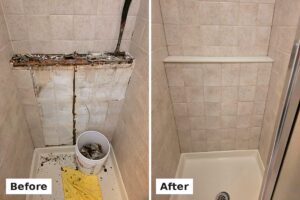
Dull, scratched or etched stone floors can almost always be restored to look as good as, or better than, the day they were installed, without replacing them. The right process depends on your stone. Here’s how marble, travertine, limestone, slate and terrazzo floors are restored, what you can do yourself, and what it costs.
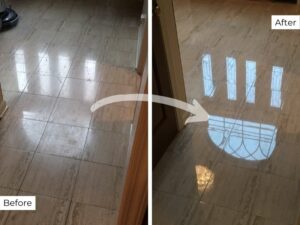 Most marble and travertine floors are done in a day and can be walked on right away. Stripping jobs on slate and terracotta usually take 2 to 3 days. Every quote is free.
Signs Your Stone Floor Needs Restoring
- Dull traffic paths where the shine is worn away
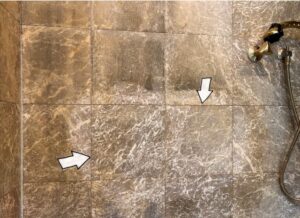
- Etching (dull spots) from spills or the wrong cleaners
- Scratches, chips and open holes
- Dark, dirty grout lines
- Patchy, peeling or yellowed wax or coatings
Step 1: Deep Clean
Every restoration starts with a deep clean. We use stone-safe cleaners and 350° vapor steam to pull dirt out of the grout lines and the pores and pits of the stone, things a mop can’t reach.Step 2: Repair
Chips, cracks and holes are filled with color-matched resins. On travertine, we fill the open pits that trap dirt. Missing or cracked grout gets patched.Step 3: Refinish
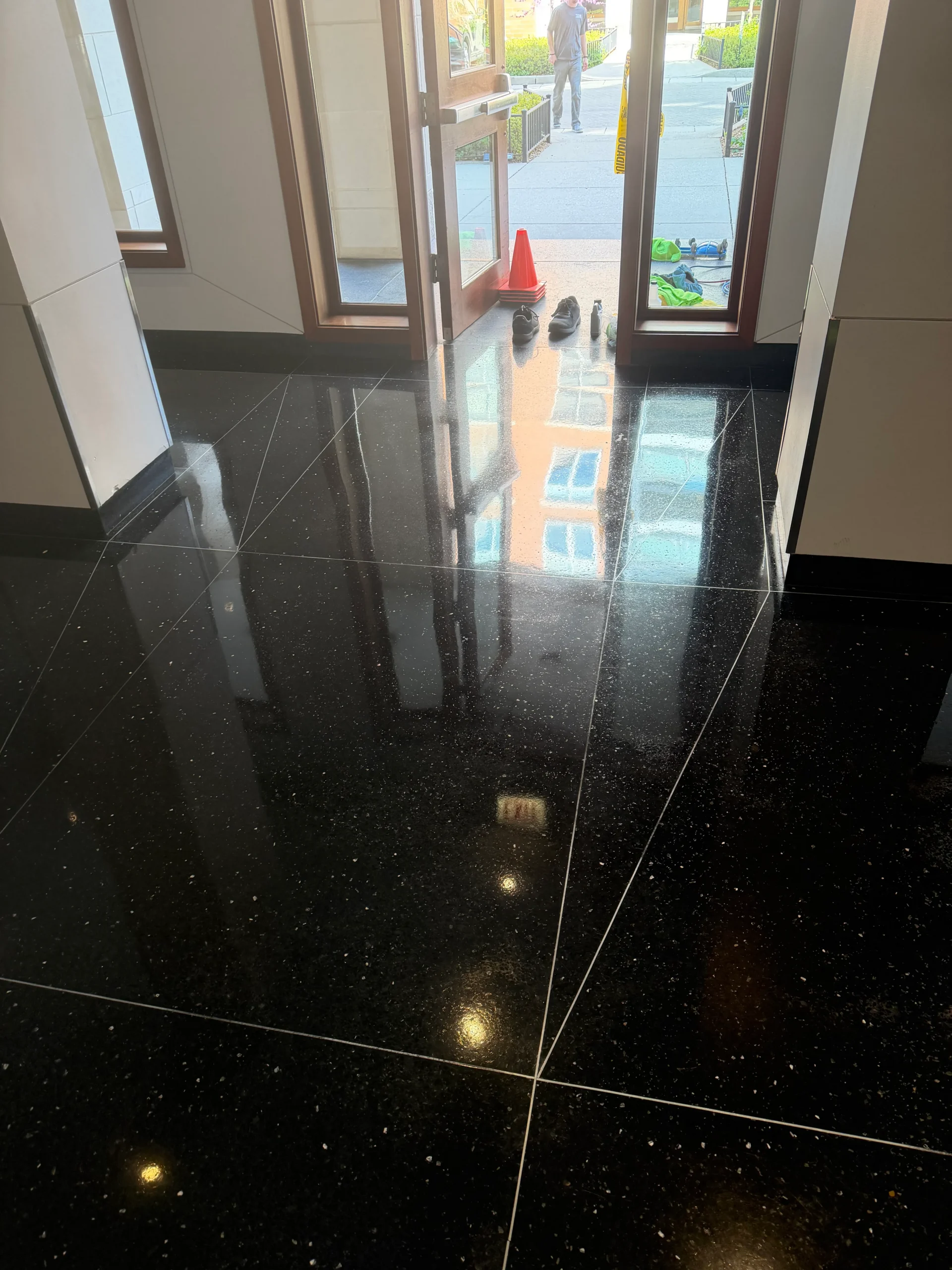
This is where the stone itself gets restored, and it depends on the type:- Marble, travertine, limestone and terrazzo: diamond refinished in multiple steps to remove etching, scratches and wear, then finished to the sheen you choose, from honed matte to high polish. No waxes or coatings.
- Slate, terracotta and Saltillo: old coatings and wax are stripped down to the raw stone, then the floor is enhanced or given a new protective finish.
Step 4: Protect
We seal the stone to protect it from stains. Slate, terracotta and Saltillo can be upgraded to MicroGuard ADSIL, a permanent protective coating. Dirty grout can be color sealed for a uniform, stain-resistant finish.What You Can Do Yourself
- Clean with a pH-neutral stone cleaner, never vinegar, bleach or all-purpose sprays
- Dust mop often, since grit is what scratches and dulls stone
- Use mats at entries and felt pads under furniture
- Wipe up acidic spills right away
What Affects the Cost of Stone Floor Restoration?
- Type of stone: marble, travertine, slate and terracotta each need a different process.
- Size of the floor: larger floors cost more overall but less per square foot.
- Condition: light etching polishes out quickly, while deep scratches, worn paths, holes or old coatings take more work.
- Finish and protection: the sheen you choose and the sealer or coating you add.
Most marble and travertine floors are done in a day and can be walked on right away. Stripping jobs on slate and terracotta usually take 2 to 3 days. Every quote is free.