How to Remove Etching From Marble Showers and Countertops
Marble is one of the most beautiful natural stones used in homes today. From elegant marble showers to luxurious kitchen countertops, marble surfaces add a timeless and sophisticated look to any space.
However, marble is also sensitive to acidic substances and mineral buildup, which can lead to a common problem known as marble etching.
Many homeowners notice dull spots, cloudy areas, or white marks on their marble and assume the stone is permanently damaged. In reality, these issues are usually caused by surface etching, which can often be restored through professional marble honing and polishing.
At Prestige Grout, Marble & Granite Restoration Specialists, we regularly restore marble surfaces that have been affected by etching, hard water damage, and improper cleaning products.
In this guide, we’ll explain:
- What marble etching is
- What causes marble to lose its shine
- Why DIY cleaners often make the problem worse
- How professional marble restoration works
What Marble Etching Looks Like
Marble etching occurs when acidic substances react with the calcium carbonate found in natural marble.
Common causes include:
- Acidic cleaning products
- Vinegar or lemon juice
- Soap and shampoo residue
- Hard water mineral buildup
- Certain household cleaners
Instead of leaving a stain, these substances chemically react with the surface of the stone, causing the polished finish to become dull or cloudy.
Homeowners often notice:
- Dull spots on marble
- White or cloudy areas
- Uneven shine across the surface
- Rough or slightly chalky texture
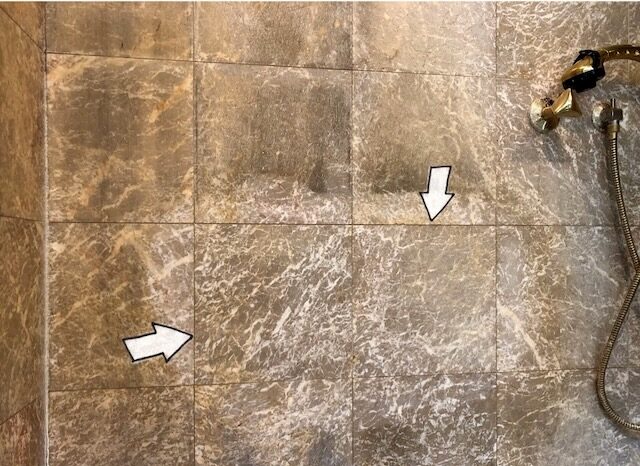
In marble showers, etching often develops from constant exposure to water, soap, and cleaning chemicals.
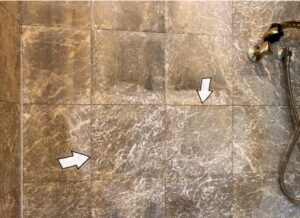
The image above shows a sample refinishing area surround by terribly etched marble on a marble shower wall. Small test areas like this help demonstrate how honing removes surface etching and begins restoring the natural finish of the stone.
Why Marble Is Vulnerable to Etching
Marble is a natural stone composed primarily of calcium carbonate, which reacts easily with acidic substances.
When acid comes into contact with marble, it dissolves microscopic layers of the stone surface. This removes the polished finish and leaves the marble looking dull or cloudy.
Unlike stains that penetrate into the stone, etching affects the texture of the marble surface itself.
This is why etched marble cannot usually be repaired with store-bought cleaners or polishing sprays. Instead, the surface must be refinished using professional stone restoration techniques.
How Professional Marble Restoration Works
Professional marble restoration involves a process called honing and polishing. This process removes the damaged surface layer and restores the marble’s original finish.
Step 1 – Deep Cleaning
The surface is thoroughly cleaned to remove soap residue, oils, and mineral buildup.
Step 2 – Diamond Honing
Industrial diamond honing pads are used to smooth the stone and remove etched areas.
Step 3 – Progressive Polishing
The marble is polished using progressively finer abrasives to restore the natural shine.
Step 4 – Sealing
A professional penetrating stone sealer is applied to help protect the surface from moisture and staining.
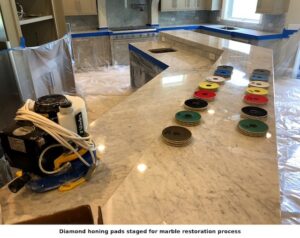
This photo shows diamond honing pads staged before the marble restoration process begins. These pads are used in multiple stages to remove etching and refine the marble surface.
The Difference Between Marble Etching and Marble Stains
Many homeowners confuse marble etching with staining, but they are very different problems.
Marble Stains
Stains occur when substances penetrate the stone and discolor it.
Common staining agents include:
- Oil
- Wine
- Coffee
- Rust
Marble Etching
Etching is a surface reaction caused by acidic substances. Instead of discoloring the stone, it removes the polished finish.
Etching usually appears as:
- Dull patches
- Cloudy spots
- Loss of shine
Because etching affects the stone’s surface, it must be corrected through professional honing and polishing.
Results of Professional Marble Polishing
When marble restoration is performed correctly, the results can be dramatic.
Professional marble polishing can:
- Remove dull etched areas
- Restore the natural shine of marble
- Smooth rough surfaces
- Bring back the stone’s original beauty
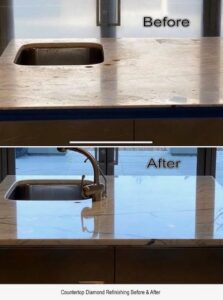
This before and after example shows how professional marble polishing can restore a countertop surface that had lost its shine due to etching and wear.
How to Prevent Marble Etching
While marble is naturally sensitive to acids, proper maintenance can greatly reduce future damage.
Helpful tips include:
- Avoid acidic cleaners such as vinegar
- Use pH-neutral stone cleaning products
- Wipe spills quickly
- Dry shower walls after use
- Periodically reseal marble surfaces
Professional Marble Restoration in Chicagoland
If your marble shower walls, countertops, or natural stone surfaces have developed dull spots or cloudy areas, professional restoration can often bring them back to life.
Prestige Grout, Marble & Granite Restoration Specialists provides expert natural stone services including:
- Marble polishing
- Marble honing
- Shower restoration
- Grout repair
- Natural stone refinishing
We proudly serve homeowners throughout Schaumburg and the greater Chicagoland area.
If your marble surfaces have lost their shine, professional restoration can dramatically improve their appearance.