
The Top 7 Tile & Grout Cleaning Mistakes Every Chicago Homeowner Is Making (And How to Fix Them)
How to avoid costly damage, preserve your floors, and keep grout looking new longer — without scrubbing yourself to death.
Introduction
Many Chicago homeowners don’t realize just how tricky tile and grout care can be. What starts as a simple cleaning often leads to permanent grout damage, mold, and costly repairs — especially when the wrong tools, products, or methods are used.
In this guide, we’ll break down the 7 most common tile and grout cleaning mistakes, explain why they’re harmful, and show you exactly what to do instead to keep your floors, showers, and backsplashes pristine. (This isn’t just theory — this is how the pros do it.)
1. Using Harsh Chemicals That Damage Tile & Grout
Many store-bought cleaners contain acids, bleach, or ammonia — and while they seem strong enough to “clean,” they actually deteriorate grout and etch tile surfaces over time.
Instead: Use pH-neutral, professional-grade cleaners designed for the surface you’re treating (natural stone vs porcelain vs ceramic).

2. Over-Soaking With Water
Flooding grout with water seems harmless, but grout is porous — excessive moisture lets dirt and contaminants sink deeper rather than lift out.
Pro tip: Damp mopping and extraction, not soaking, prevents mold and reduces dry-out staining.
3. Skipping Sealing After Cleaning or Installation
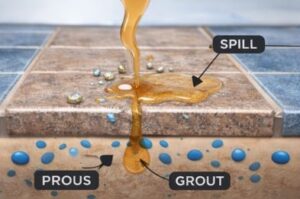
Unsealed grout behaves like a sponge — absorbing spills, stains, and odors almost immediately.
Fix: Color sealing after cleaning not only protects grout — it restores color and makes future cleanup much easier.
4. Treating All Tiles the Same Way
Different tile surfaces react differently to cleaners:
-
Natural stone (marble/limestone) is sensitive to acids
-
Porcelain and ceramic handle abrasives better
-
Some sealants can look streaky or dull on certain tiles
What to do: Identify the tile type before choosing your cleaning protocol.
5. Ignoring the Grout Condition Itself
Dirty grout vs. damaged grout: These are very different. Grout that is cracked, spongy, or crumbling will never look clean just by scrubbing.
Solution: A professional assessment can determine whether your grout needs repair or replacement — not just cleaning.
6. Using the Wrong Tools
Steel brushes, high-pressure washers, and metal scrapers might feel “powerful,” but they scratch tile and grind grout away, making things worse.
Professional approach: Soft brushes, steam, and controlled agitation removes dirt without damage.
7. Post-Cleaning Neglect
Once grout is cleaned, it needs protection — and routine maintenance matters. Regular sweeping, using pH-neutral cleaners, and periodic resealing dramatically prolong results.

Bonus: Why Chicago Homes Require Extra Care
Chicago’s climate — with freezing winters and salty streets — means tiles and grout encounter moisture and contaminants more aggressively. This accelerates wear and makes professional care even more valuable.
When to Hire a Professional
If your grout is:
✔ Deeply stained
✔ Mold-infested
✔ Cracked or missing
✔ Uneven color
✔ Never sealed
… a professional restoration will usually be faster, safer, and more cost-effective than battling it yourself.
Conclusion
Tile and grout cleaning isn’t an everyday chore — it’s part of maintaining your home’s investment. Avoid these common mistakes, use the right methods, and you’ll keep surfaces looking newer longer.
And when DIY hits a wall? That’s where Prestige Grout steps in.